
Building a Unified Inbox for Dental Clinics: Facebook, Instagram, and WhatsApp in One Patient Record
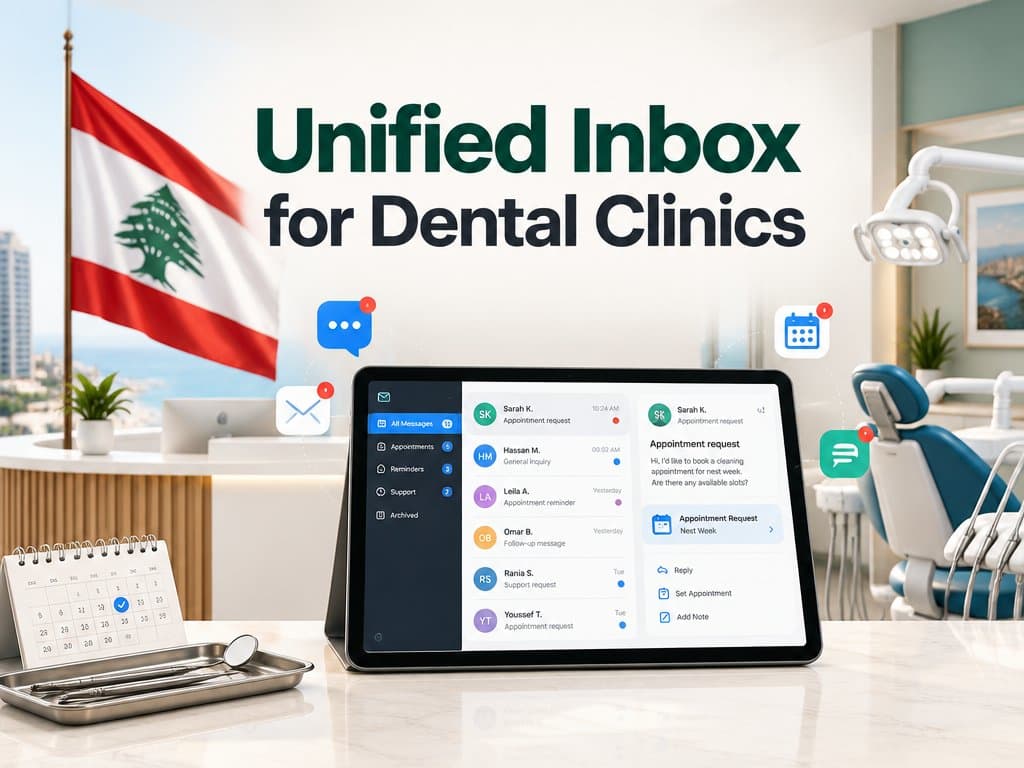
A patient DMs your Instagram, WhatsApps a question weeks later, then calls to book, three touchpoints your front desk sees as three strangers. Here's how a real unified inbox merges WhatsApp, Instagram, and Facebook into one patient record, built on official APIs instead of fragile integration.
Building a Unified Inbox for Dental Clinics: Facebook, Instagram, and WhatsApp in One Patient Record
A new patient messages your clinic's Instagram about teeth whitening. Two weeks later they WhatsApp a completely different question about pricing. A month after that, they call the front desk to book and whoever answers the phone has no idea any of the previous conversations happened. To your staff, that's three unrelated interactions. To the patient, it's one relationship they expect your clinic to remember. That gap is where dental clinics quietly lose recall follow-ups, double-book patients, and let leads go cold not because the front desk is careless, but because the messages are scattered across three apps that were never built to talk to each other.
I'm Khalid Arafa, and the unified inbox collapsing WhatsApp, Instagram, and Facebook messages into a single patient record is one of the core features of the dental clinic CRM I've built for multi-branch, bilingual clinics across the Gulf. This post is the technical and practical case for why that feature exists, and what it actually takes to build it correctly rather than as a thin veneer over three separate inboxes.
Tip
TL;DR A unified inbox isn't three chat widgets stacked in one screen it's a system that recognizes the same patient across channels, keeps one continuous conversation history regardless of where they wrote, and ties every message back to that patient's actual dental record: treatment plan, recall schedule, and appointment history. Built on the official Meta Graph API (not a fragile browser-scraping workaround), this is what turns scattered social messages into something a front desk can actually act on instead of just read.
Why a dental clinic's messages fragment in the first place
Patients don't choose one channel and stick to it they use whichever app is already open on their phone at that moment. A younger patient discovers your clinic through an Instagram post and DMs a question. A parent booking for their child calls or WhatsApps because it's faster for them. An existing patient with a follow-up question uses whatever thread they last messaged from, often without remembering which one that was. Each of these channels Instagram DMs, Facebook Messenger, WhatsApp has its own inbox, its own notification system, and by default, zero awareness that the other two exist.
For a solo practitioner answering a handful of messages a day, that's manageable with enough attention. For a multi-branch clinic with several front-desk staff across locations, it isn't messages get answered by whoever happens to be logged into that particular app, patient history has to be reconstructed from memory or a search through old threads, and a patient who switches channels mid-conversation is treated as a stranger by whoever picks up the new one.
What "unified" actually has to mean not just visually, but technically
The distinction that separates a real unified inbox from three chat windows glued together side by side is unified identity: recognizing that the person who Instagram-messaged you last month and the person who WhatsApped you today are the same patient, and merging their conversation history and their dental record accordingly. Without that matching logic, you've built a dashboard, not a patient communication system.
Technically, this runs on a standard pattern regardless of clinic size: each channel connects through its official API the Meta Graph API for Instagram and Facebook, and the WhatsApp Business API for WhatsApp rather than a browser-automation scraper that logs into WhatsApp Web on the platform's behalf. The API route is slower to set up and requires business verification, but it's the only stable, compliant option; scraper-based integrations break routinely whenever the platform updates its web client, and they violate the platform's terms of service outright. For a healthcare-adjacent business handling patient information, that reliability and compliance gap isn't a minor technical preference it's the difference between a system you can depend on and one that silently stops working the week you need it most.
Once messages arrive through those official channels, the system needs four things happening correctly, in order: matching the incoming message to an existing patient record by phone number or account identifier, threading it into that patient's existing conversation history rather than starting a new one, routing it to the right staff member or branch, and preserving the channel of origin so staff know exactly where to reply from.
| Three separate inboxes | Basic "combined" inbox (dashboard only) | True unified inbox with patient matching | |
|---|---|---|---|
| Patient recognized across channels | No each app treats them as a new contact | No messages are aggregated but not merged by identity | Yes one patient record regardless of channel |
| Conversation history preserved across channels | No | Partial visible per channel, not merged | Full continuous history |
| Tied to dental record (treatment plan, recalls, appointments) | No | No | Yes |
| Risk of duplicate bookings or missed recalls | High | Moderate | Low |
| Reliability of the underlying connection | N/A (native apps) | Depends on integration method | High, if built on official APIs |
| Staff workflow | Constant app-switching | Slightly better, still fragmented data | One screen, one patient, full context |
Where this shows up directly in dental clinic outcomes
The clinics I've built this for weren't asking for a unified inbox as an abstract nice-to-have they were describing a specific, recurring problem: a patient due for a six-month recall messages on Instagram to ask a quick question, gets an answer, and the recall reminder that was supposed to go out that week never accounts for the fact that this patient is already actively engaged in a conversation on a different channel. Two automated systems recall reminders and social replies running blind to each other produce exactly the outcome dental CRMs are supposed to prevent: a patient who feels like the clinic doesn't know them, right before the moment they were about to book.
The same fragmentation shows up in lead handling. A prospective patient's first message often the one with the highest intent, since they went out of their way to write it arrives on whichever channel they happened to open, and if that channel isn't monitored as closely as the clinic's main phone line, the response time gap alone can be the difference between a booked consultation and a lead that goes to a competitor who happened to reply faster. A dental clinic AI adoption approach I've written about for the Qatar market covers this same principle from the automation side the unified inbox is the data layer that makes that kind of automation actually reliable, instead of automating on top of fragmented, incomplete conversation history.
Multi-branch and bilingual: where the complexity actually compounds
For a single-location clinic, a unified inbox mainly solves the channel-fragmentation problem described above. For a multi-branch clinic increasingly the norm in Gulf SMB dental practices it also has to solve routing: a message needs to reach the branch the patient actually visits or is asking about, not just whichever staff member happens to be online across the whole organization. And for a bilingual patient base, the system needs to preserve language context per conversation, since a patient who writes in Arabic on one channel and English on another is still one patient, and staff need that history visible regardless of which language the current message arrives in.
This is the same underlying principle behind matching a CRM's core data model to what a business's core workflow actually is, which I covered in more depth comparing specialized versus general-purpose CRM a generic customer-support inbox tool can aggregate channels, but only a system built around "patient" as the core object, with treatment history and recall cadence attached, turns that aggregation into something a dental clinic can actually run on.
A simple decision model
Build or adopt a unified inbox now if: your clinic gets meaningful inbound messages across more than one channel, and staff currently have to check multiple apps to know whether a patient has already reached out.
Prioritize official API integrations (Meta Graph API, WhatsApp Business API) over cheaper scraper-based tools if: patient data and appointment continuity matter to your practice which, for a healthcare business, they always do since a broken scraper integration doesn't just cause inconvenience, it silently drops real patient messages.
Insist on patient-identity matching, not just channel aggregation, if: you're evaluating vendors and comparing feature lists this is the single feature that separates a genuinely unified inbox from three inboxes with a shared login screen.
Wrapping up
A unified inbox for a dental clinic isn't a convenience feature bolted onto a CRM it's what makes the rest of the CRM's promises (accurate recall scheduling, real patient history, fast lead response) actually true in practice, instead of true only for the subset of conversations that happened to occur on the one channel the front desk was watching that day. Built on official APIs with real patient-identity matching underneath, the technical complexity is worth it precisely because the alternative three separate inboxes staff have to manually reconcile is where dental clinics lose patients they never even realized they'd already been talking to.
The broader case for building this kind of vertical-specific data model instead of adapting a general-purpose tool is covered in specialized vs. general-purpose CRM, and the automation layer this unified data makes possible is explored in the dental clinic AI adoption piece for the Qatar market.
Related Posts
Related Articles
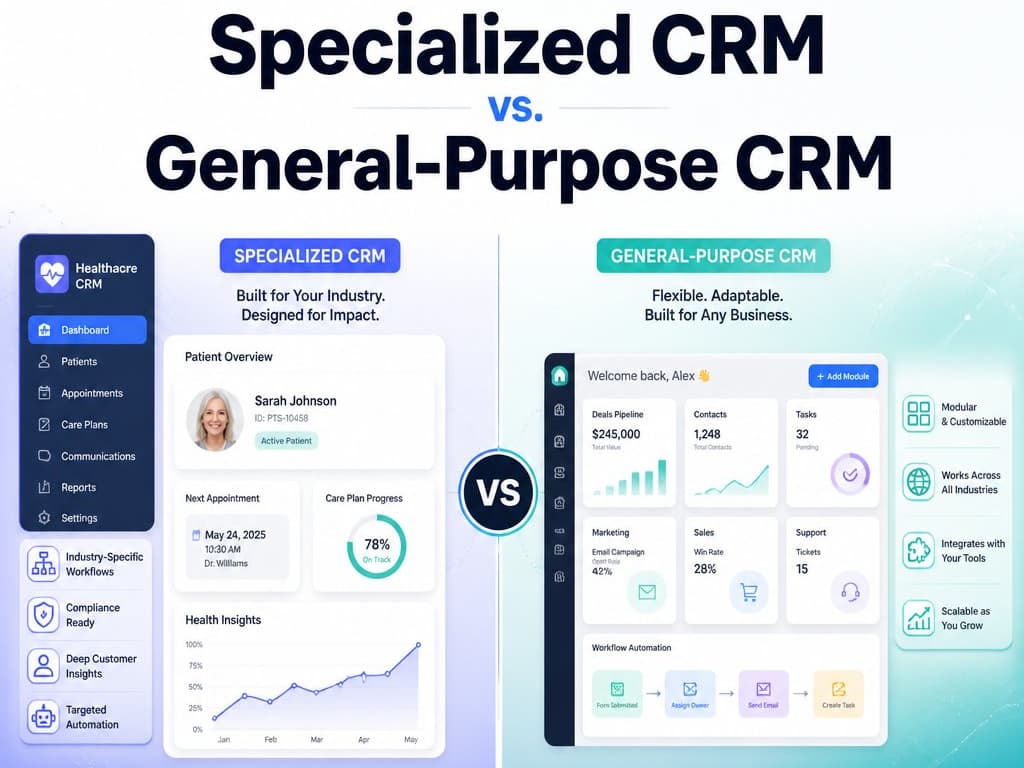
Specialized CRM vs. General-Purpose CRM: What Actually Fits a Gulf SMB
Not every business runs on a sales pipeline. A breakdown, from a decade building both general-purpose and specialized multitenant CRMs for Gulf SMB verticals, of when Zoho/HubSpot fits and when your workflow has quietly outgrown it.
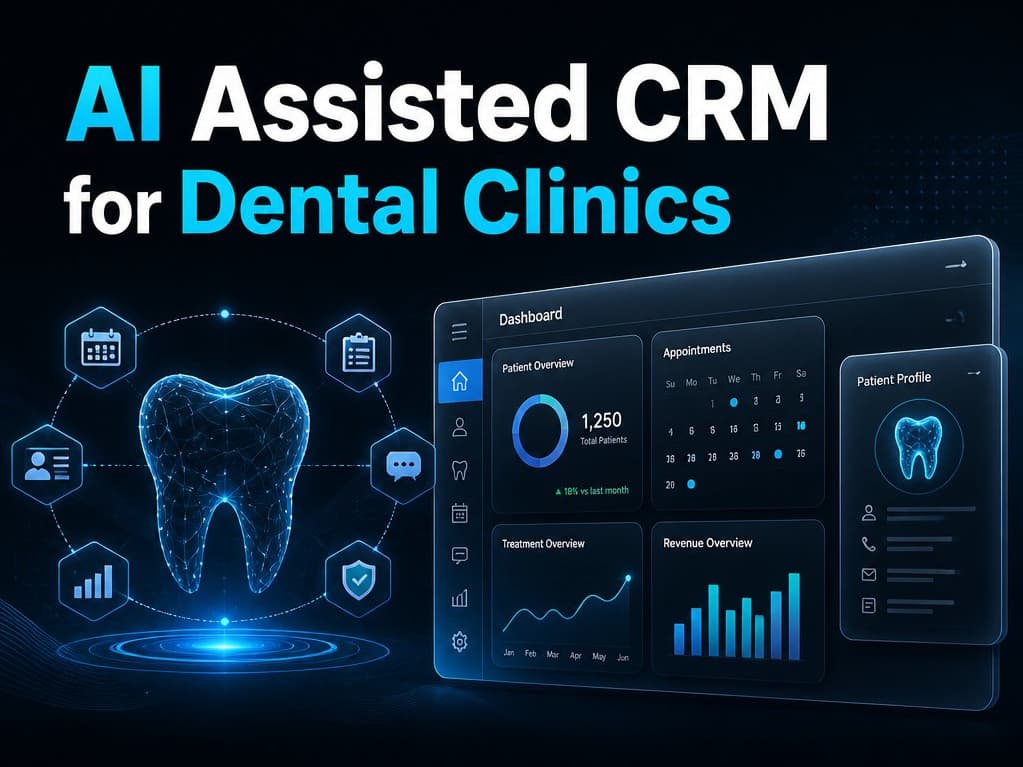
AI Assisted CRM for Dental Clinics in Qatar in 2026: A Practical Guide
Patients researching dental care increasingly ask an AI assistant first, and being visible there depends on having clear, structured, accurate information about your clinic publicly available services.
CRM for Dental Clinics in Qatar: Why Your Practice Software Isn't the Problem
Most Qatar dental clinics don't need new software — they need a CRM layer on top of it. Packaged tools handle scheduling fine until PDPPL data rules, multi-provider insurance billing, and multi-branch patients break them. Here's when to buy vs build.