

Real-Estate Management Software for Multi-Property Operators
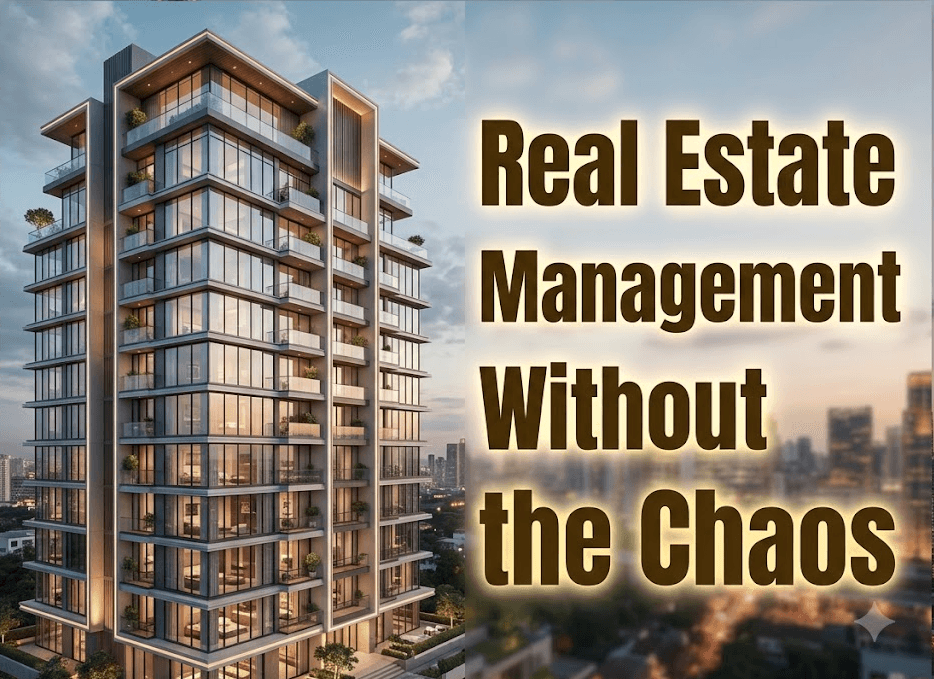
How Real-Estate & compound management software cuts maintenance time, lifts occupancy, and replaces five disconnected tools with one platform.
Real-Estate & Compound Management Software: One System for Maintenance, Leasing, and Occupancy
If you're operating more than one residential compound, you already know the real cost isn't rent collection — it's the five different tools your team juggles just to keep the lights on. Compound management software fixes that by putting maintenance, leasing, occupancy, and resident communication in one place instead of scattered across spreadsheets, phone calls, and disconnected apps.
Most property teams running multiple communities end up with a patchwork: maintenance requests over the phone, leasing tracked in a spreadsheet, occupancy numbers nobody trusts, and residents left guessing about the status of their own service request. None of it talks to each other, so nothing stays in sync — and that's exactly where units sit empty and admin hours pile up.
By the end of this post you'll know what a real property management platform should cover across maintenance, leasing, and resident experience — and how it stacks up against running compounds on spreadsheets or a generic tool.
Tip
TL;DR — Compound management software built for multiple communities gives you a tracked maintenance lifecycle with auto-dispatch, a real-time operations dashboard, and a resident app people actually use. It replaces five disconnected tools with one, and it works across multiple compounds, currencies, and roles.
1. The maintenance problem that's actually a trust problem
When maintenance runs on phone calls, every request becomes a guessing game — did anyone see it, is a technician coming, is it even logged? Residents chase updates, staff chase technicians, and nothing has a paper trail.
Real facilities management software fixes this with a workflow-driven maintenance engine: every service request moves through an enforced state machine, gets auto-dispatched to the right trade, and triggers notifications at each step. Residents see live status instead of calling the office.
- Service requests and work orders with a tracked lifecycle, not a phone log
- Auto-dispatch by trade, so the right technician gets the job without a manual handoff
- Auto-notifications at each stage, so residents stop calling to ask "any update?"
2. One dashboard instead of five disconnected tools
Property operators running several communities don't need five tabs open to know what's going on — they need one screen. A real-time operations dashboard shows KPIs, a needs-attention queue, and live occupancy across every compound at once, with a drag-and-drop board for managing work in progress.
For operators managing multiple properties, that dashboard also has to handle multi-compound, role-based access and multi-currency accounting — a single-property tool simply doesn't scale to that.
3. A resident app people actually use
Residents don't want a portal they have to be trained on — they want to request a service, track it live, and browse listings from their phone. A resident and owner app that covers service requests, unit management, and listings keeps residents self-serving instead of calling the front desk, which is where most of the admin hours disappear.
Spreadsheets vs. generic tools vs. compound management software
| Spreadsheets / phone calls | Generic property tool | Compound Management Software | |
|---|---|---|---|
| Maintenance tracking | No status, no trail | Basic ticketing only | Enforced state machine + auto-dispatch by trade |
| Resident communication | Phone calls, no visibility | Email or portal, one-way | Live status + auto-notifications in a resident app |
| Occupancy visibility | Manual, always outdated | Per-property only | Real-time occupancy across all compounds |
| Leasing funnel | Spreadsheet, leads drop off | Basic CRM, not property-specific | Listings-to-lease funnel built into the CRM |
| Multi-compound support | N/A | Rarely built for it | Multi-compound, role-based, multi-currency |
| Admin overhead | Highest | Reduced but still manual | ~8 hrs/week saved, 5 tools into 1 |
4. Why this matters for occupancy, not just admin
Faster maintenance resolution and a working leasing funnel don't just save admin time — they directly move occupancy. When maintenance closes out roughly 40% faster and leads don't slip out of a spreadsheet, occupancy climbs because fewer units sit vacant or under-serviced while prospects wait on a callback.
The leasing side of this problem looks different again for developers selling units rather than renting them — payment plans, phases, and investor portfolios need a CRM built for that model, not a generic sales pipeline.
Wrapping Up
Compound management software isn't about adding another dashboard to your stack — it's about collapsing five disconnected tools into one platform your operations team, owners, and residents all trust. For multi-compound operators, that's the difference between chasing status updates and actually running the business from one screen.
If you're deciding whether to patch together more point tools or consolidate onto one platform, it's worth scoping the real numbers first — units, compounds, and current tool count — before committing either way.
Managing multiple compounds and thinking about this?
See a real build in Compound Management Software — Faster Maintenance, Higher Occupancy, Less Admin or get in touch for a free scope call.
Related Posts
Related Articles
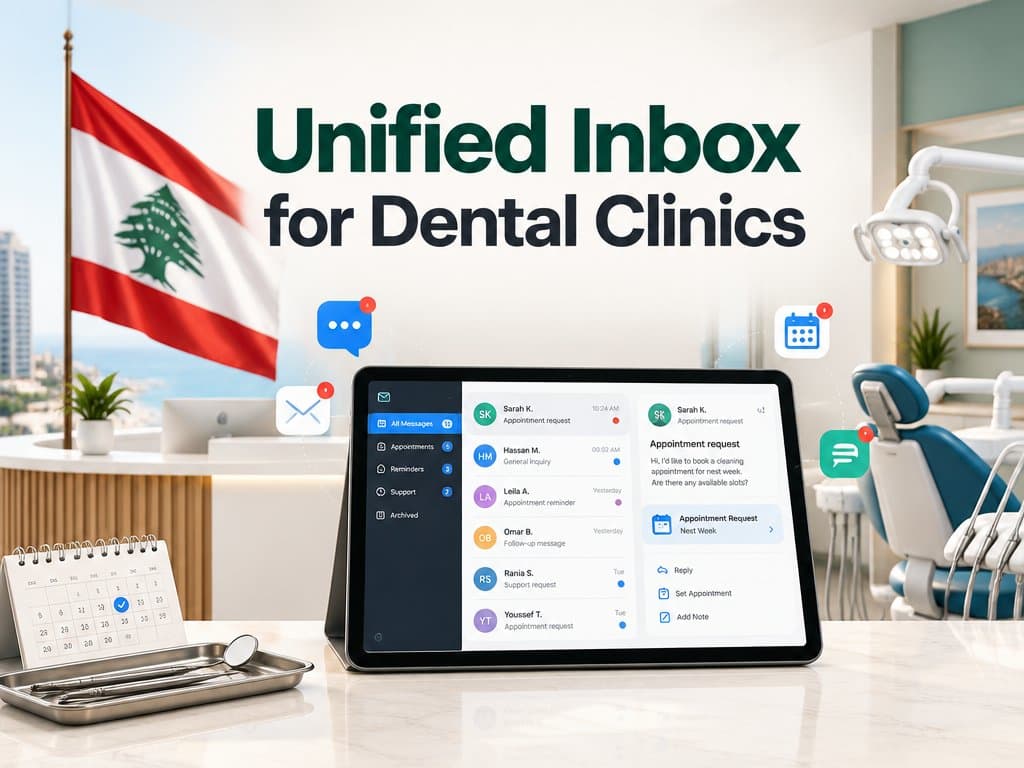
Building a Unified Inbox for Dental Clinics: Facebook, Instagram, and WhatsApp in One Patient Record
A patient DMs your Instagram, WhatsApps a question weeks later, then calls to book, three touchpoints your front desk sees as three strangers. Here's how a real unified inbox merges WhatsApp, Instagram, and Facebook into one patient record, built on official APIs instead of fragile integration.
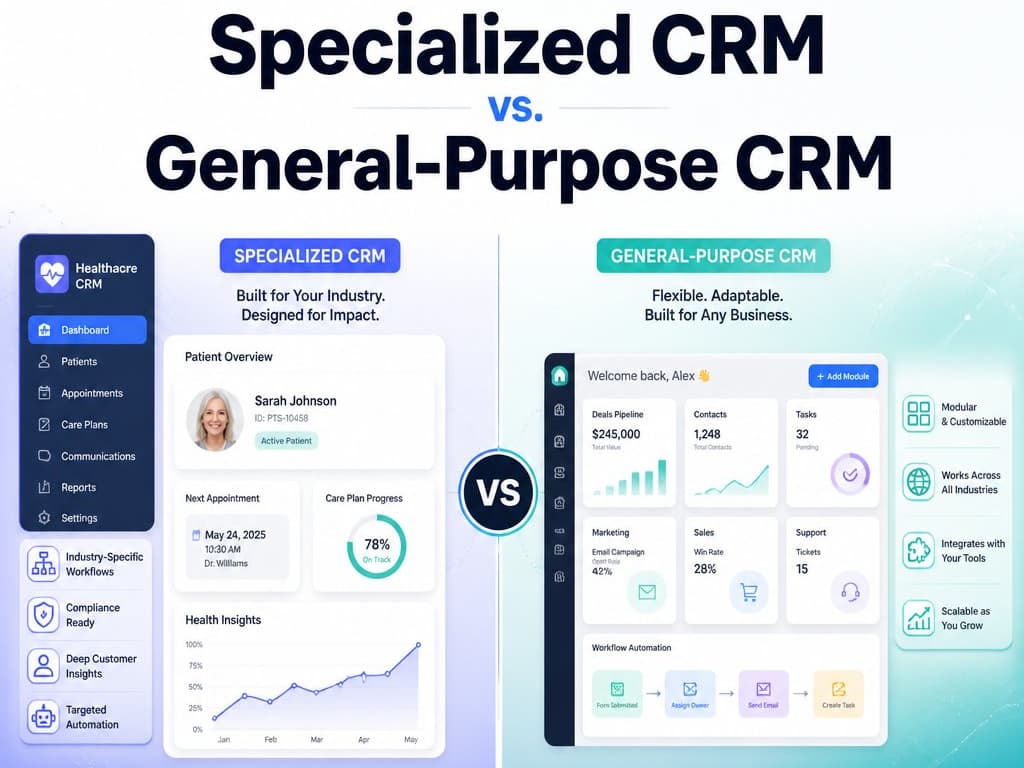
Specialized CRM vs. General-Purpose CRM: What Actually Fits a Gulf SMB
Not every business runs on a sales pipeline. A breakdown, from a decade building both general-purpose and specialized multitenant CRMs for Gulf SMB verticals, of when Zoho/HubSpot fits and when your workflow has quietly outgrown it.
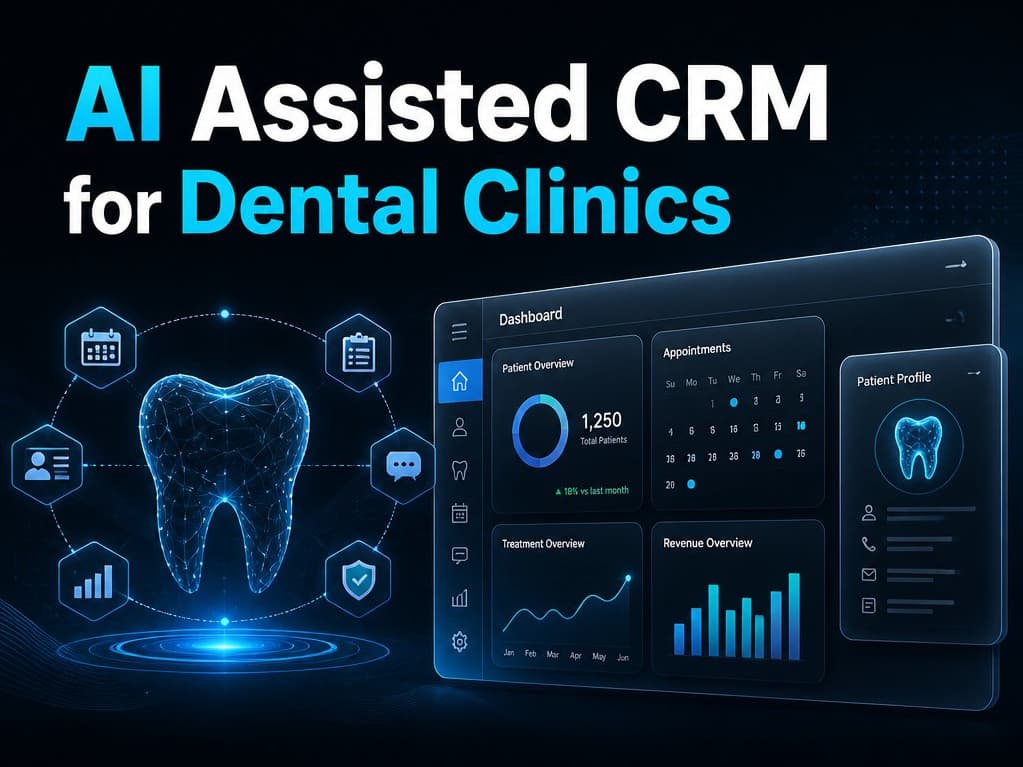
AI Assisted CRM for Dental Clinics in Qatar in 2026: A Practical Guide
Patients researching dental care increasingly ask an AI assistant first, and being visible there depends on having clear, structured, accurate information about your clinic publicly available services.