

Best CRM for Property Developers Dubai: What Actually Works
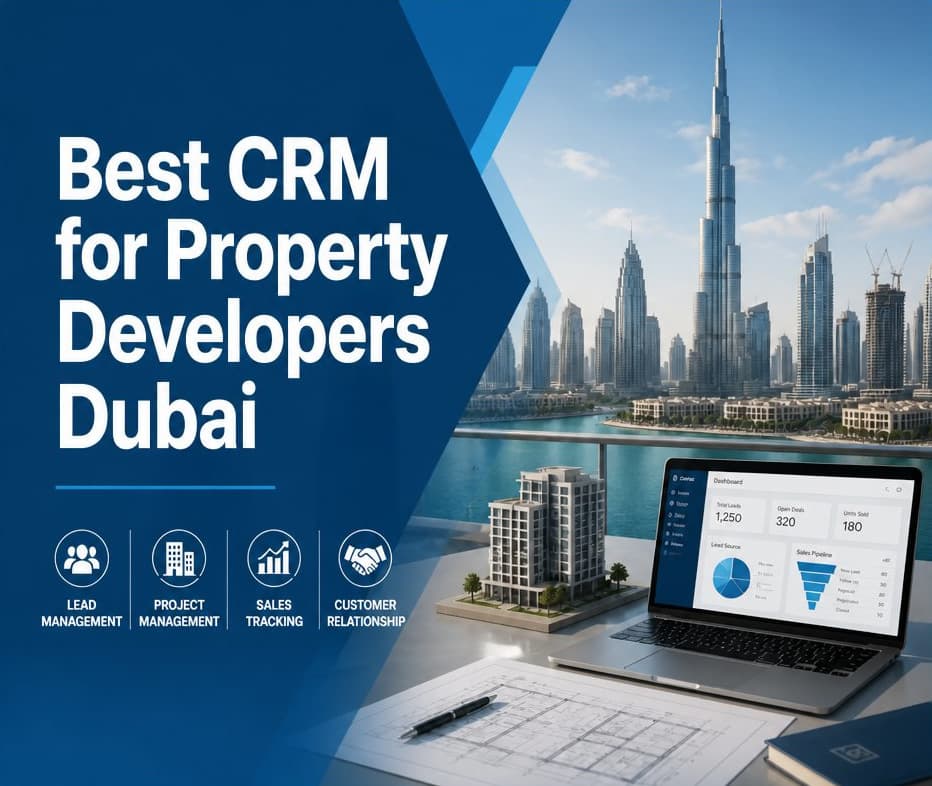
The best CRM for property developers Dubai needs handles off-plan sales, investors, and leasing in one system — here's what to look for.
Best CRM for Property Developers Dubai: What Actually Works
Most searches for the best CRM for property developers Dubai end the same way: a generic sales CRM that tracks deals fine but has no concept of a unit, a payment plan, or an investor portfolio. Real estate isn't a simple pipeline — it's units, phases, brokers, investors, and leasing, all moving at once.
Generic CRMs force developers to bolt on spreadsheets for inventory and payment schedules the software was never built to handle. That gap is exactly where deals, follow-ups, and investor updates start slipping.
By the end of this guide you'll know what a real estate-ready CRM needs to do, and why most developers in Dubai eventually move to a system built specifically around their sales model.
Tip
** The best CRM for real estate companies in Dubai isn't the one with the most features. It's the one that models units, payment plans, investors, and leasing natively — which usually means custom-built, not off-the-shelf.
What Does a Property Developer's CRM Actually Need to Do?
A CRM for property developers has to manage more than contacts and deals:
- Inventory — units, floors, phases, and availability status in real time.
- Payment plans — milestone-based payment schedules tied to construction progress for off-plan property sales.
- Broker and channel management — commission tracking across external agents and internal sales teams.
- Investor relationships — portfolio views for buyers holding multiple units across projects.
- Leasing and renewals — for developers who also manage secondary market or holiday homes inventory.
Generic CRMs treat all of this as "custom fields." A CRM for real estate investment companies UAE needs it to be the actual data model.
Why Generic CRMs Fall Short for Dubai Real Estate
Off-the-shelf platforms are built for a generic buyer-to-close pipeline. Property sales in Dubai don't work that way:
- Off-plan sales span years, not weeks — a CRM needs to track construction milestones and linked payment triggers, not just deal stages.
- One client can hold multiple units across multiple projects, which most CRMs can't represent without heavy customization.
- Leasing and sales often run in the same business, and few platforms handle both cleanly.
- Call center and lead nurturing volume is high, and generic lead scoring doesn't account for property-specific signals like unit type or budget range.
Developers usually notice the mismatch after go-live, when the sales team is running Excel next to the CRM just to track payment plans properly.
Benefits of a Custom CRM for Property Developers UAE
Built Around Units, Not Generic Deals
Inventory, phases, and unit status live as first-class data, not custom fields bent to fit a generic pipeline.
Payment Plans Tied to Construction
Milestone-based payment schedules for off-plan property sales UAE trigger automatically as construction phases update, instead of manual tracking in spreadsheets.
One System for Sales and Leasing
A single CRM for property leasing UAE and sales means investors and tenants live in the same client record, not two disconnected tools. Operators running the leasing side across multiple communities hit the same one-system argument from the maintenance and occupancy angle — see real-estate management software for multi-property operators.
Investor Portfolio Views
An investor management CRM UAE shows every unit a client owns across projects, which matters for retention and repeat sales.
Real Estate Marketing Automation
Lead nurturing sequences, WhatsApp follow-ups, and call center scripts built around property client management UAE — not generic email drip campaigns.
| Factor | Generic CRM (Zoho, HubSpot) | Custom Real Estate CRM |
|---|---|---|
| Unit/inventory tracking | Custom fields, limited | Native data model |
| Payment plan automation | Manual/spreadsheet | Built-in milestones |
| Investor portfolio view | Not supported | Native |
| Sales + leasing in one system | Rare | Standard |
Challenges of Building a Custom Real Estate CRM
- Higher upfront cost than subscribing to an off-the-shelf plan.
- Requires a development partner who understands real estate workflows, not just generic CRM building.
- Data migration from spreadsheets or a legacy CRM takes real planning, especially for large unit inventories.
- Ongoing maintenance is your responsibility, though a fixed support retainer usually covers this affordably.
These trade-offs are worth weighing against what a mismatched generic CRM costs in lost follow-ups and manual work over a few years.
Cost: Off-the-Shelf CRM vs Custom Real Estate CRM Dubai
A mid-tier Zoho or similar plan with the add-ons needed to approximate real estate features (custom modules, advanced automation, higher user tiers) often lands in the same price range as a custom build's early hosting costs — without ever fully matching the workflow.
A custom real estate CRM has a fixed development cost, then low ongoing hosting and support fees. For a developer managing multiple projects and a growing sales/leasing team, the breakeven against generic CRM licensing typically lands within the first 12-18 months.
Process: Building a CRM for Real Estate Companies in Dubai
- Discovery — mapping units, phases, payment structures, and how sales, leasing, and investor relations currently work.
- Data model design — units, projects, investors, brokers, and leases as core entities, not add-ons.
- Core build — inventory management, payment plan automation, and pipeline stages matched to off-plan and secondary market sales.
- Integrations — WhatsApp Business, email, portals like Property Finder or Bayut where relevant, and call center tools.
- Migration and testing — importing existing inventory and client data, then testing with the sales team before rollout.
- Handover and support — documentation and a direct line to the development team for updates as new projects launch.
Best Practices for Choosing a Real Estate CRM in Dubai
- List every entity you track today — units, investors, brokers, leases — before evaluating any CRM against it.
- Ask vendors directly how payment plans and milestones are modeled, not just whether "custom fields" exist.
- If you handle both sales and leasing, prioritize a system that unifies them rather than running two tools.
- Calculate 3-year cost including add-ons, not the entry-level monthly price, when comparing generic platforms to a custom build.
FAQ
What's the best CRM for real estate companies in Dubai? For small teams selling standard inventory, a generic CRM with real estate add-ons can work. For developers with complex payment plans, multiple projects, or leasing alongside sales, a custom CRM for property developers UAE fits better long-term.
Can a CRM handle both off-plan sales and holiday home leasing? Yes, if it's designed with a flexible entity model — this is one of the clearest reasons developers move away from generic platforms.
How long does building a custom real estate CRM take? A focused MVP covering inventory, payment plans, and core pipeline stages typically takes 8-12 weeks, depending on integrations.
Does a custom CRM integrate with property portals like Bayut or Property Finder? Yes — custom builds can integrate directly with major UAE property portals and WhatsApp Business without relying on marketplace add-ons.
Wrapping Up
The best CRM for property developers Dubai isn't the platform with the longest feature list — it's the one that treats units, payment plans, and investors as core data instead of workarounds. Generic CRMs can get a small sales team started, but they rarely survive contact with real off-plan sales and leasing complexity.
If your team is still tracking payment milestones in spreadsheets next to your CRM, that's the clearest sign it's time to look at a system built for how real estate actually works.
Managing a real estate portfolio or sales pipeline? See a real compound management build or get in touch.
Related Posts
Related Articles
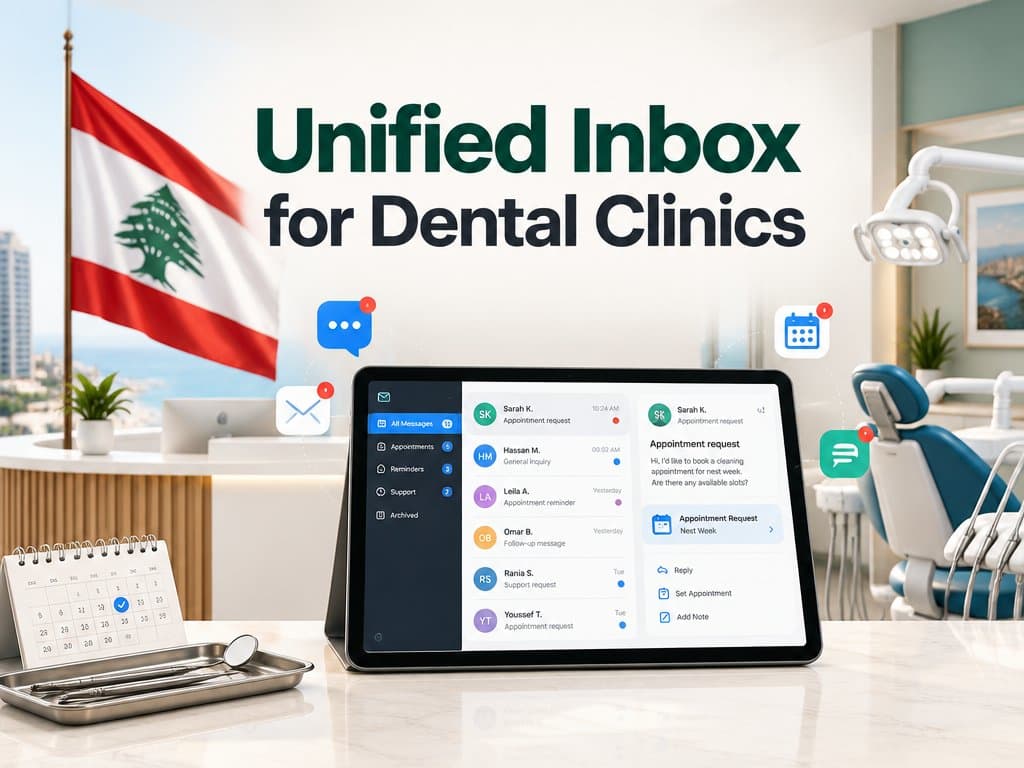
Building a Unified Inbox for Dental Clinics: Facebook, Instagram, and WhatsApp in One Patient Record
A patient DMs your Instagram, WhatsApps a question weeks later, then calls to book, three touchpoints your front desk sees as three strangers. Here's how a real unified inbox merges WhatsApp, Instagram, and Facebook into one patient record, built on official APIs instead of fragile integration.
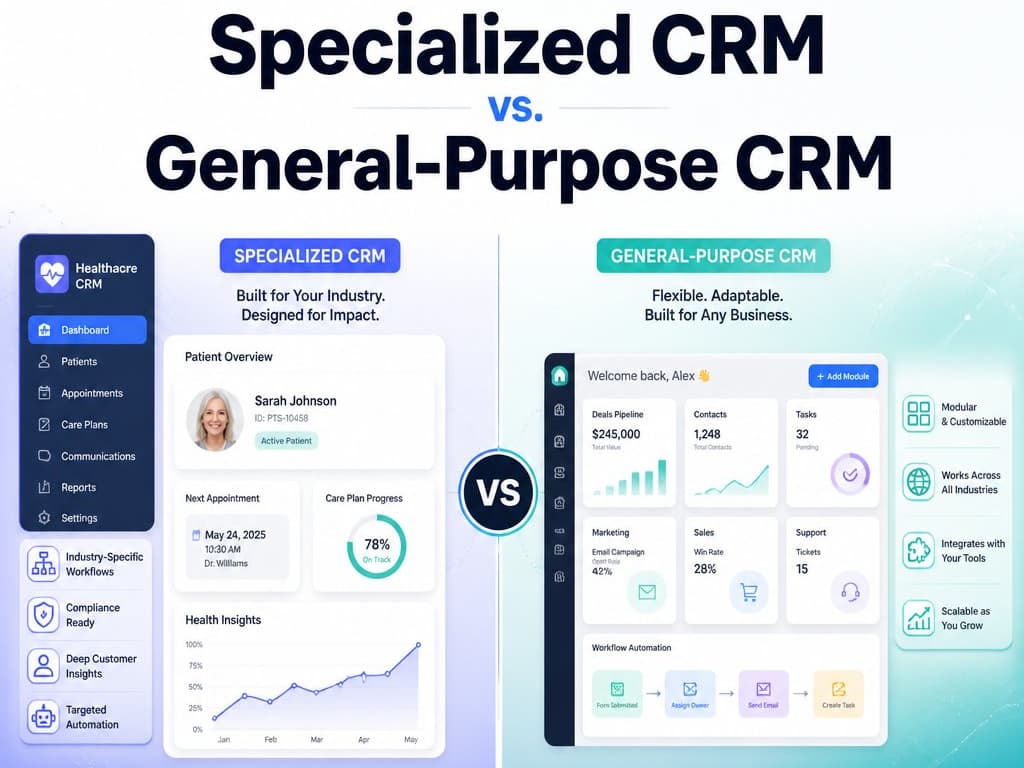
Specialized CRM vs. General-Purpose CRM: What Actually Fits a Gulf SMB
Not every business runs on a sales pipeline. A breakdown, from a decade building both general-purpose and specialized multitenant CRMs for Gulf SMB verticals, of when Zoho/HubSpot fits and when your workflow has quietly outgrown it.
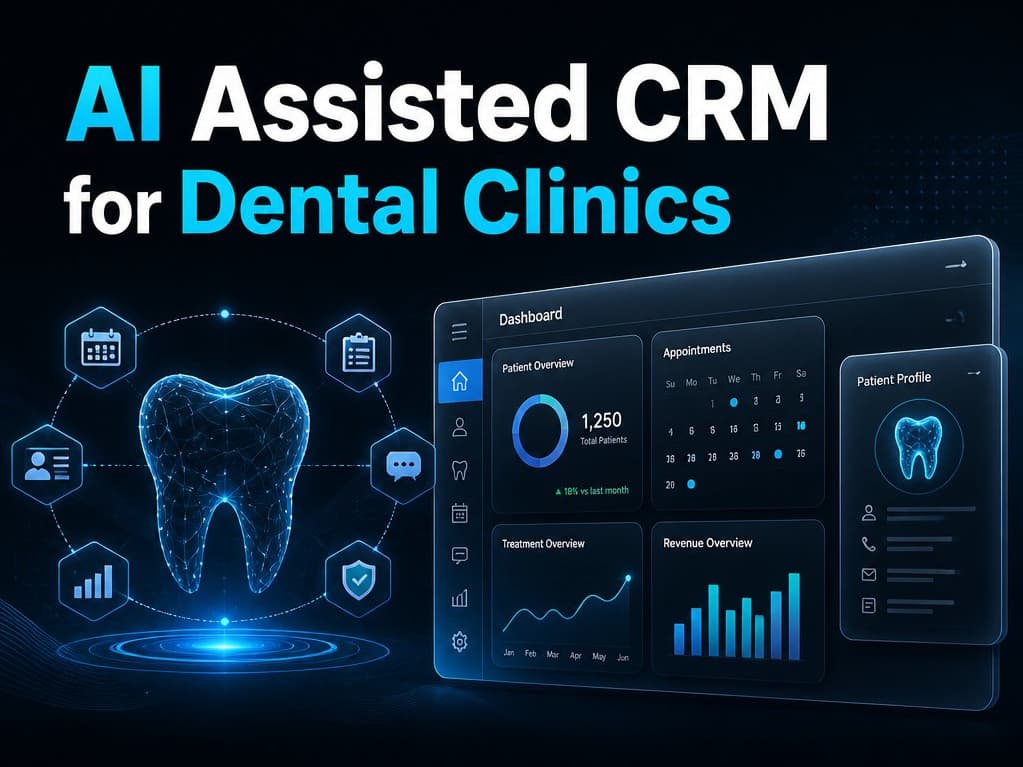
AI Assisted CRM for Dental Clinics in Qatar in 2026: A Practical Guide
Patients researching dental care increasingly ask an AI assistant first, and being visible there depends on having clear, structured, accurate information about your clinic publicly available services.