

CRM for Dental Clinics in Qatar: Why Your Practice Software Isn't the Problem
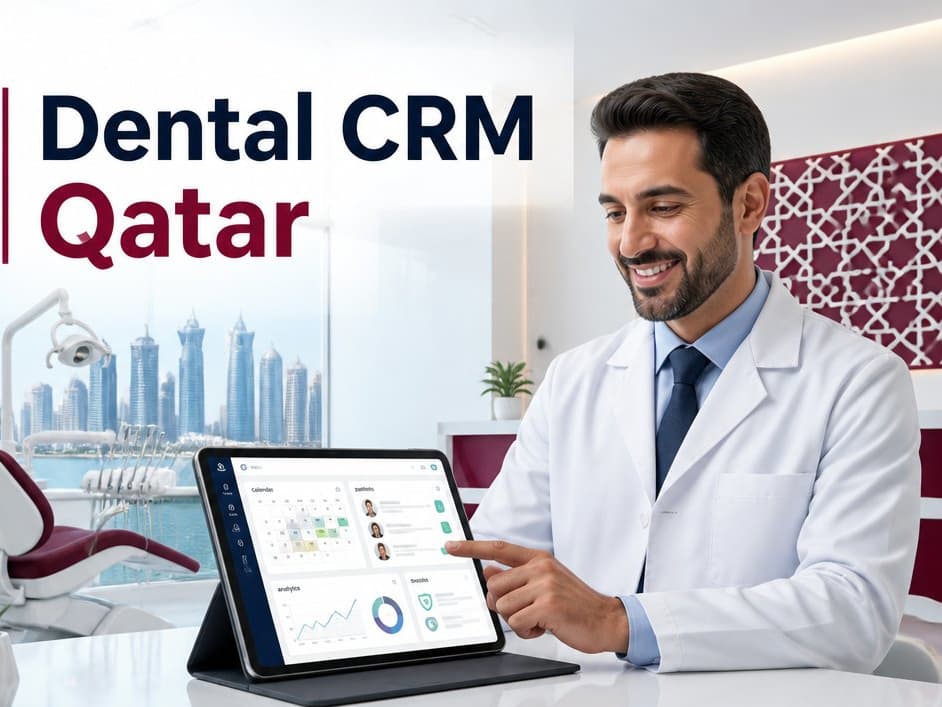
Most Qatar dental clinics don't need new software — they need a CRM layer on top of it. Packaged tools handle scheduling fine until PDPPL data rules, multi-provider insurance billing, and multi-branch patients break them. Here's when to buy vs build.
CRM for Dental Clinics in Qatar: Off-the-Shelf Practice Software vs a System Built for How You Actually Work
Packaged dental practice management software is the right first purchase for almost every clinic in Qatar, and I say that as someone who gets called in once it stops being enough. Tools like Dentrix, Curve Dental, or the regional players already handle scheduling, charting, and billing out of the box, and a new clinic doesn't need custom software before it has patients.
The problem is the same one every packaged tool runs into once a clinic grows past one branch: a CRM for a dental clinic in Qatar isn't just appointment software. It's PDPPL-compliant patient data handling, insurance direct-billing across multiple providers, WhatsApp-first recall reminders, and — if you're running more than one location — a single view of a patient who might book at your West Bay branch and show up at your Al Sadd one. Packaged tools cover the first job well. The second is where most clinics quietly start paying twice.
Tip
TL;DR — Start with off-the-shelf practice software. Move to a custom CRM layer when you cross two branches, when insurance direct-billing reconciliation becomes a full-time job, or when patient data handling under Qatar's PDPPL becomes something your compliance team actually has to answer for. Most clinics don't need to replace their practice software — they need a CRM layer sitting on top of it that the packaged tool was never built to be.
The year-one comparison
For a single-location clinic with 2-4 dentists, the packaged tool wins on every practical measure.
| Off-the-shelf practice software | Custom CRM | |
|---|---|---|
| Time to first booking | Days | Weeks |
| Up-front cost | Low, subscription-based | Higher, one-time build |
| Dental-specific features (charting, imaging) | Built in | Has to be built or integrated |
| Multi-branch patient view | Usually per-location, siloed | Built for it from day one |
| PDPPL-specific data handling | Generic, vendor-dependent | Configured for your exact workflow |
| Insurance direct-billing across providers | Depends on vendor's local integrations | Built around your actual payer mix |
If you're opening your first clinic, buy the packaged tool. That's not a hedge — it's the same conclusion I reached comparing Zoho against a custom CRM build in the UAE, and dental practices in Qatar follow the exact same curve, just with health-data compliance layered on top.
Why dental clinics hit the wall faster than other businesses
1. Patient data isn't ordinary CRM data
Qatar's Personal Data Privacy Protection Law, in force since 2017, applies to all industries handling electronic personal data and carries penalties of up to 5 million Qatari Riyals for noncompliance. Health data specifically sits in a stricter category: where patient data qualifies as personal data of a special nature, including health data, processing it requires prior permission from the competent authority, and explicit consent from the patient — or a guardian, for a child — must be obtained before that medical data is processed at all.
Most packaged dental software wasn't built with Qatar's PDPPL in mind — it was built for a global market and localised later. That's usually fine for basic patient records. It gets shakier the moment you want to run marketing campaigns, automated recall messages, or analytics off the same patient data, because now you're processing that special-category data for a second purpose the original consent may not cover.
2. Insurance billing is a workflow, not a feature
Most in-network private clinics in Doha bill the patient's insurer directly — the clinic verifies coverage at check-in and the patient pays only the co-payment, and whether that direct billing exists at all depends entirely on the specific arrangement between your clinic and each insurer. A clinic working with five or six different insurance providers is running five or six slightly different verification and reconciliation processes — and most packaged tools handle this generically, or not at all, leaving front-desk staff to manage it in spreadsheets.
3. Multi-branch patient identity gets messy fast
The same patient books online at one branch, walks into another, and expects their history, X-rays, and treatment plan to already be there. The dental practice management software market across the Middle East is projected to keep growing at roughly 10% a year, and most of that growth is multi-location groups — exactly the segment where packaged, per-branch licensing starts fighting against how the clinic actually operates.
4. Recall and reminders live where your patients actually are
Patients in Qatar expect appointment reminders and recall messages over WhatsApp, not email. Some regional dental platforms have added native WhatsApp integration, but plenty of the bigger global names still treat SMS or email as the default channel, which means low reply rates and no-shows that a CRM layer built around WhatsApp — the channel patients actually check — fixes without touching the underlying practice software at all.
Note
This is the same pattern from why I stopped recommending off-the-shelf tools by default: the tool isn't wrong, it's just solving last year's problem. The fix is rarely "replace it" — it's usually "build the layer it was never meant to be."
A simple decision model
Stay on packaged practice software if:
  - You're a single-branch clinic with a stable patient base
  - Your insurance mix is 1-2 providers with existing direct billing
  - Patient marketing and recall automation aren't priorities yet

Add a custom CRM layer if:
  - You operate 2+ branches and need one patient record across them
  - You bill 3+ insurance providers with different reconciliation rules
  - PDPPL compliance for patient data reuse (marketing, analytics)
    needs to be something you can actually document and defend
  - No-show rates are high and WhatsApp-based recall would fix it

Replace the practice software entirely only if:
  - Charting, imaging, or clinical workflow itself is the bottleneck
    (rare — usually it's everything built around the clinical core)
The clinics I've worked with almost never need to rip out their practice management system. They need the CRM layer that sits between the front desk, the insurer, and the patient's phone — built once, connected to whatever practice software is already running the clinical side.
Wrapping up
Buy the packaged dental software for your first clinic in Qatar — there's no version of that advice that changes for a single location just getting started. The decision to build gets easier to see once you can name the specific thing the packaged tool can't do: reconcile five insurers, show one patient across two branches, or handle special-category health data the way PDPPL actually requires. Two of those and it's worth a conversation. Three and it's already costing you more in staff time than a CRM layer would.
If you're weighing this for a growing Qatar clinic group, get in touch — I've run this exact build-vs-buy model for healthcare and services businesses across the Gulf.
Related Posts
Related Articles
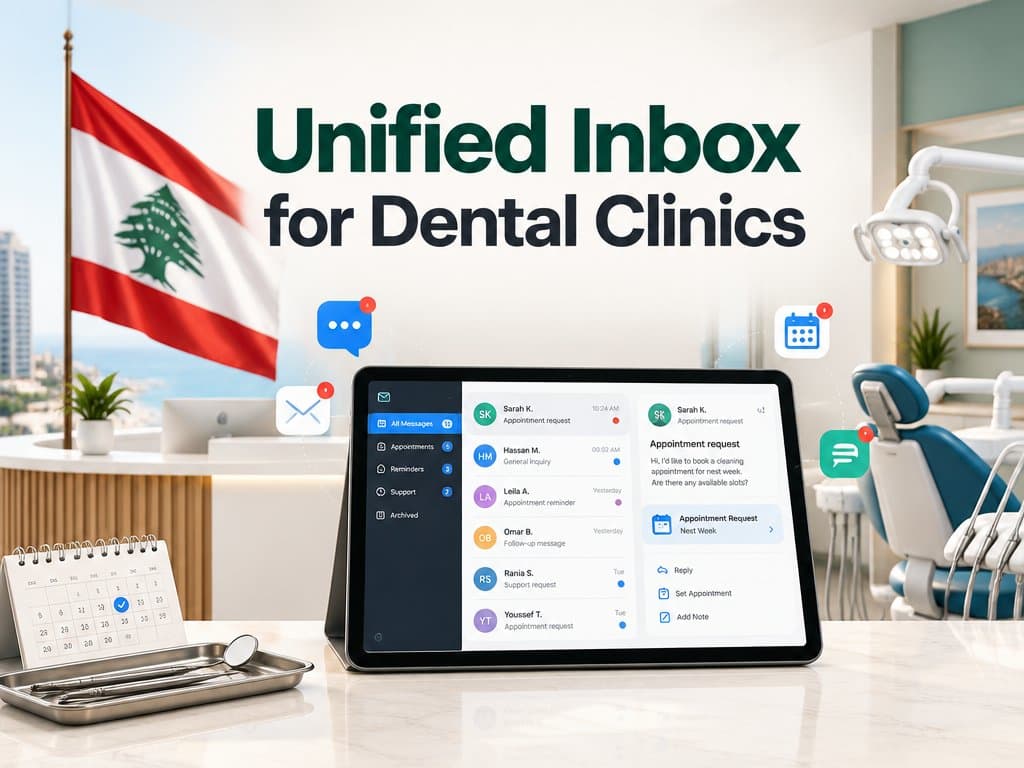
Building a Unified Inbox for Dental Clinics: Facebook, Instagram, and WhatsApp in One Patient Record
A patient DMs your Instagram, WhatsApps a question weeks later, then calls to book, three touchpoints your front desk sees as three strangers. Here's how a real unified inbox merges WhatsApp, Instagram, and Facebook into one patient record, built on official APIs instead of fragile integration.
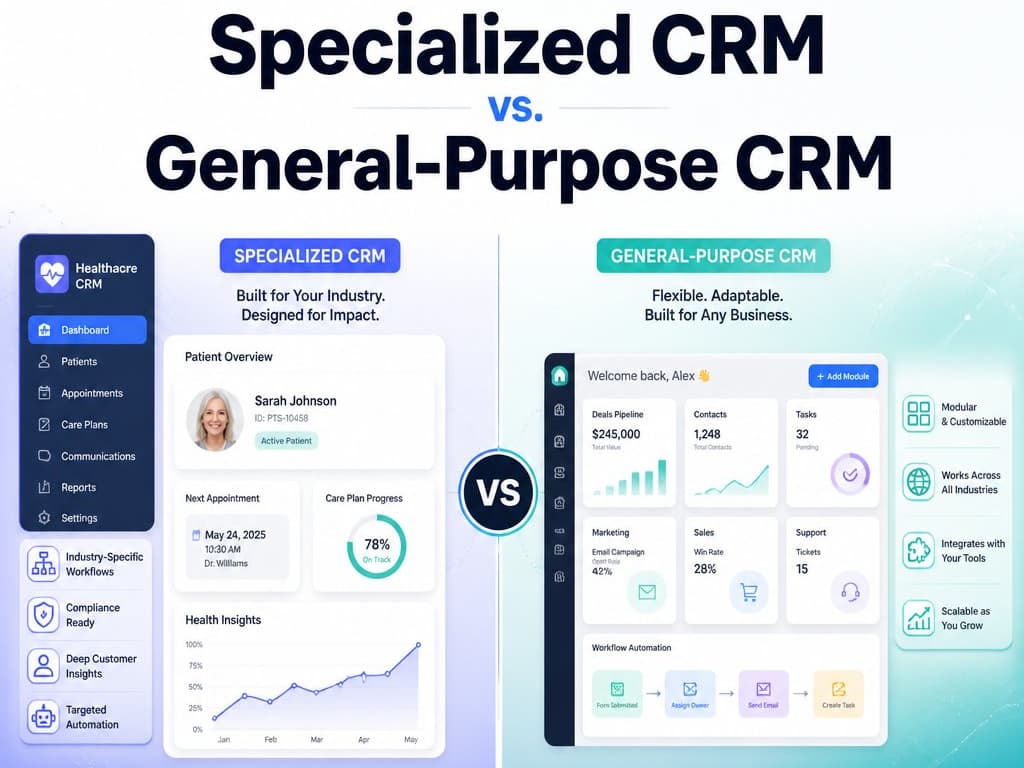
Specialized CRM vs. General-Purpose CRM: What Actually Fits a Gulf SMB
Not every business runs on a sales pipeline. A breakdown, from a decade building both general-purpose and specialized multitenant CRMs for Gulf SMB verticals, of when Zoho/HubSpot fits and when your workflow has quietly outgrown it.
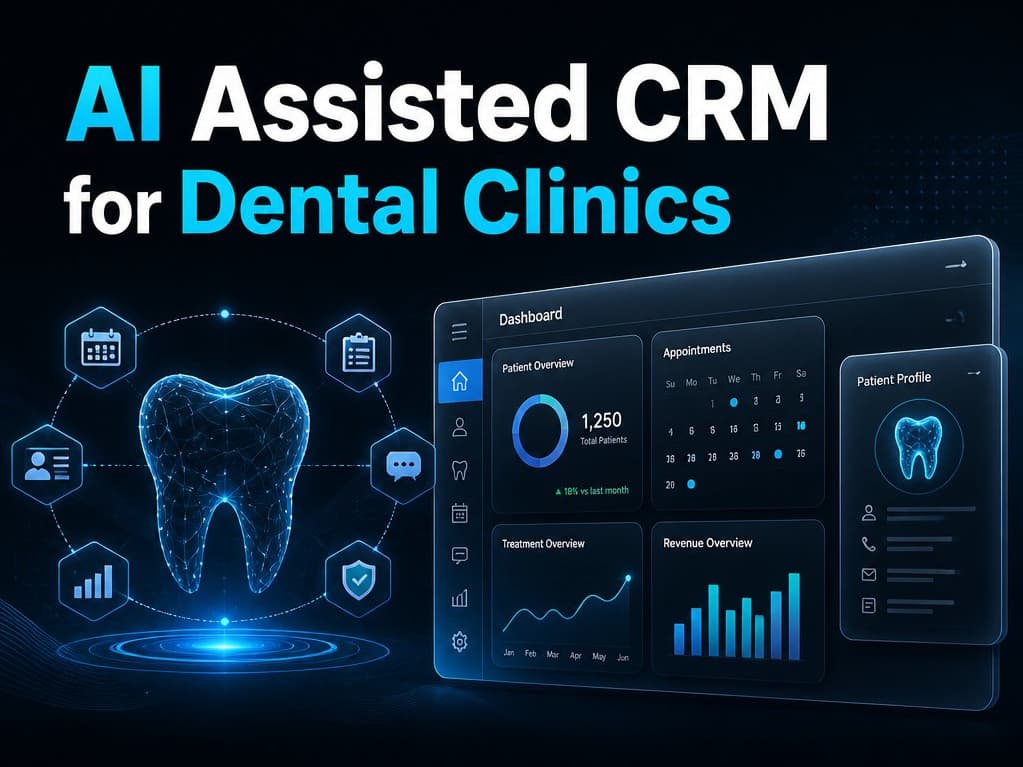
AI Assisted CRM for Dental Clinics in Qatar in 2026: A Practical Guide
Patients researching dental care increasingly ask an AI assistant first, and being visible there depends on having clear, structured, accurate information about your clinic publicly available services.