

Clinic Management, NPHIES, and CRM: What a Saudi Practice Actually Needs

NPHIES handles the claim. Your booking system handles the appointment. Neither knows which campaign paid for that patient, or why they stopped coming back.
Clinic Management, NPHIES, and CRM: What a Saudi Practice Actually Needs
Your practice management system books the appointment. NPHIES processes the insurance claim. Somewhere between those two systems, the question that actually grows a clinic — which patients come back, and why the other ones don't — falls through the gap. A clinic management system in Saudi Arabia that only solves scheduling and claims is solving the easy half of the problem.
NPHIES (the National Platform for Health Information Exchange Services) standardized how Saudi clinics submit eligibility checks, pre-authorizations, and claims to insurers — and it did genuinely fix a mess of incompatible payer formats. But NPHIES integration software answers "was this patient covered, and did the claim get paid." It has no opinion on why a patient who was covered and paid in full never rebooked, or which of your three branches is quietly losing patients to a competitor two streets over.
By the end of this post you'll know what actually needs to sit around your NPHIES integration for a Saudi clinic to run as one operation instead of three disconnected systems that happen to share a waiting room.
Tip
TL;DR — NPHIES integration is necessary but not sufficient. A clinic system built for the Saudi market needs eligibility/claims data flowing into the same record as appointments, treatment history, and follow-up — otherwise you can see every claim you filed and still have no idea which patients are worth calling back this week.
What NPHIES integration software actually covers
NPHIES connects your practice management system to payers for three core workflows: eligibility verification (is this patient covered, for what, right now), pre-authorization (does this specific treatment need payer approval before you perform it), and claims submission (billing the payer after the visit, and tracking adjudication — approved, partially approved, or rejected).
Done well, this removes a huge amount of manual back-and-forth that used to happen by phone and fax between clinics and insurers. Done as a bolt-on to an otherwise disconnected system, it becomes its own silo: a claims dashboard that tells you revenue got approved, sitting next to a scheduling calendar that has no idea which of those patients are due for a follow-up. The same pattern behind failed ERP rollouts in the UAE applies here — compliance integration ships, and the operational picture around it never gets built.
The multi-branch problem nobody mentions in the NPHIES conversation
Most growing Saudi practices aren't single-location. A dental group with branches in three neighborhoods of Riyadh has three appointment books, and if each branch's NPHIES submissions and patient records live in separate silos, nobody at the group level can answer basic questions:
- Which branch has the highest no-show rate, and is it a scheduling problem or a location problem?
- Did a patient who visited Branch A last year and Branch B this year get treated as the same patient, or as two new leads?
- Which referral source — a specific insurer plan, a campaign, a doctor referral — actually produces patients who stay?
None of this is a NPHIES question. It's a data-model question: does "patient" mean one record across every branch and every visit, or does it mean whatever the local system at each branch happens to store. Get that wrong and every other report you build sits on sand.
What a real patient record needs beyond the claim
A clinic CRM worth the name links, per patient: appointment history across every branch, treatment/procedure history, insurance eligibility status (fed by NPHIES, not maintained separately), claim status per visit, and the marketing or referral source that brought them in the first time.
That last field is the one that quietly justifies the whole project. Once you can see that a specific insurer's plan, or a specific campaign, produces patients with a higher lifetime value and lower no-show rate than another, your acquisition spend stops being a guess. This is the same shift covered in why more practices are moving off shelf-bought software — generic tools handle the transaction fine; they don't connect it to the funnel that produced it.
Note
If your clinic already runs a dedicated dental or medical PMS with strong scheduling and clinical notes, the right move is usually integrating your CRM layer around it via API rather than replacing it — see the existing dental clinic CRM setup for multi-branch practices for how that split typically works in practice.
Reconciling claims without a spreadsheet
The other place this breaks down is finance. NPHIES tells you a claim was approved for a given amount; your accounting system records revenue for the visit; and without a system tying the two together by patient and claim ID, reconciling "what we billed" against "what NPHIES actually paid" becomes a monthly spreadsheet exercise that eats a finance person's week.
A properly integrated system closes that loop automatically: claim submitted → adjudicated → payment posted → matched to the original visit record, with rejected or partially-approved claims flagged for follow-up instead of quietly written off. For a multi-branch group processing hundreds of claims a month, that's the difference between knowing your real collection rate and estimating it.
Buy, integrate, or build: three realistic paths
Most Saudi practices land on one of three setups, and the right one depends on where you already are, not on which sounds most modern:
- A NPHIES-certified PMS as the system of record. Fine for a single branch with straightforward scheduling needs. The ceiling is low the moment you open a second branch or want marketing-attribution data the PMS was never built to hold.
- PMS for clinical work, CRM layered on top via API. The PMS keeps doing what it's good at — scheduling, clinical notes, NPHIES submission — while a CRM layer pulls appointment, claim, and patient data into one cross-branch view for the front office and management. This is the path that fits most groups already invested in a clinical system they don't want to rip out.
- A single custom system covering both. Makes sense once you're large enough that licensing multiple per-branch PMS seats costs more than building one integrated platform, or when your specialty mix (say, general dentistry plus orthodontics plus a lab) doesn't map cleanly onto any off-the-shelf product.
The mistake is picking option 3 by default because it sounds more complete, when a group with two branches and a decent PMS is almost always better served by option 2 — layer the CRM, keep NPHIES submission where it already works, and revisit the build-vs-buy question once you're actually operating at a scale where the seat licensing math flips.
Wrapping Up
NPHIES integration software solves the part of a Saudi clinic's operations that a regulator can audit — eligibility, authorization, claims. It was never going to solve patient retention, multi-branch visibility, or acquisition ROI, because that was never its job. A clinic management system that actually helps a practice grow treats NPHIES as one data source feeding a single patient record, not the whole system.
If you're running NPHIES well but still can't answer which patients are worth calling back this month, that's the gap worth closing next.
Tip
Running a multi-branch practice in Saudi Arabia? See how we've built this for clinic groups or get in touch to talk through your current setup.
Related Posts
Related Articles
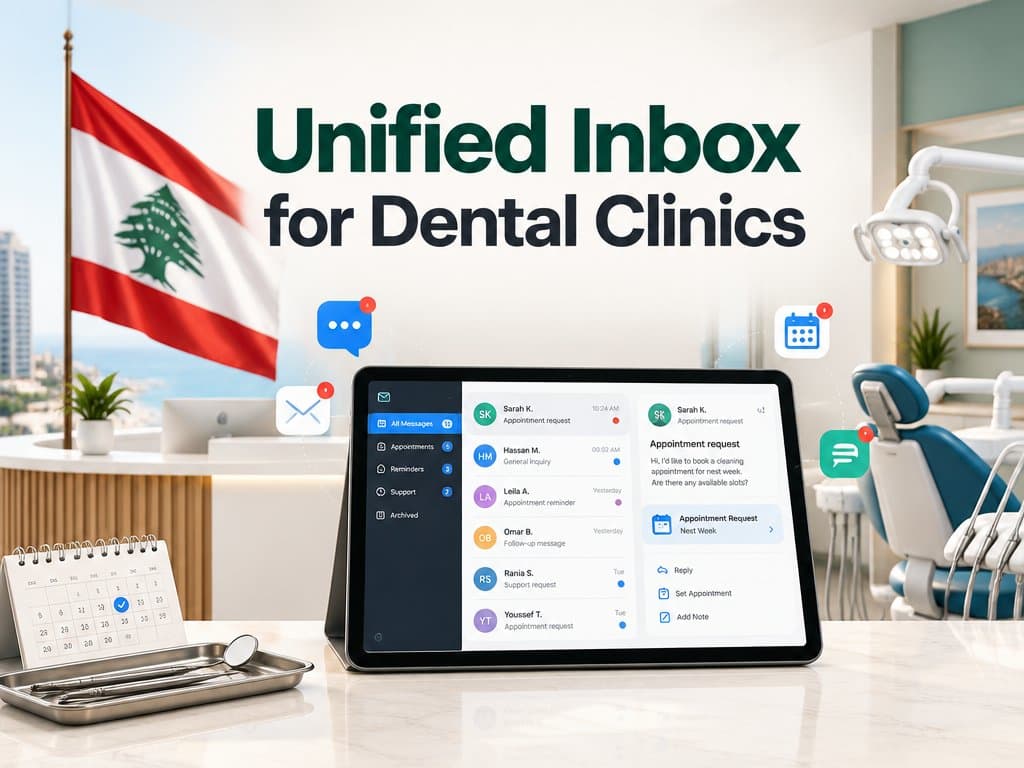
Building a Unified Inbox for Dental Clinics: Facebook, Instagram, and WhatsApp in One Patient Record
A patient DMs your Instagram, WhatsApps a question weeks later, then calls to book, three touchpoints your front desk sees as three strangers. Here's how a real unified inbox merges WhatsApp, Instagram, and Facebook into one patient record, built on official APIs instead of fragile integration.
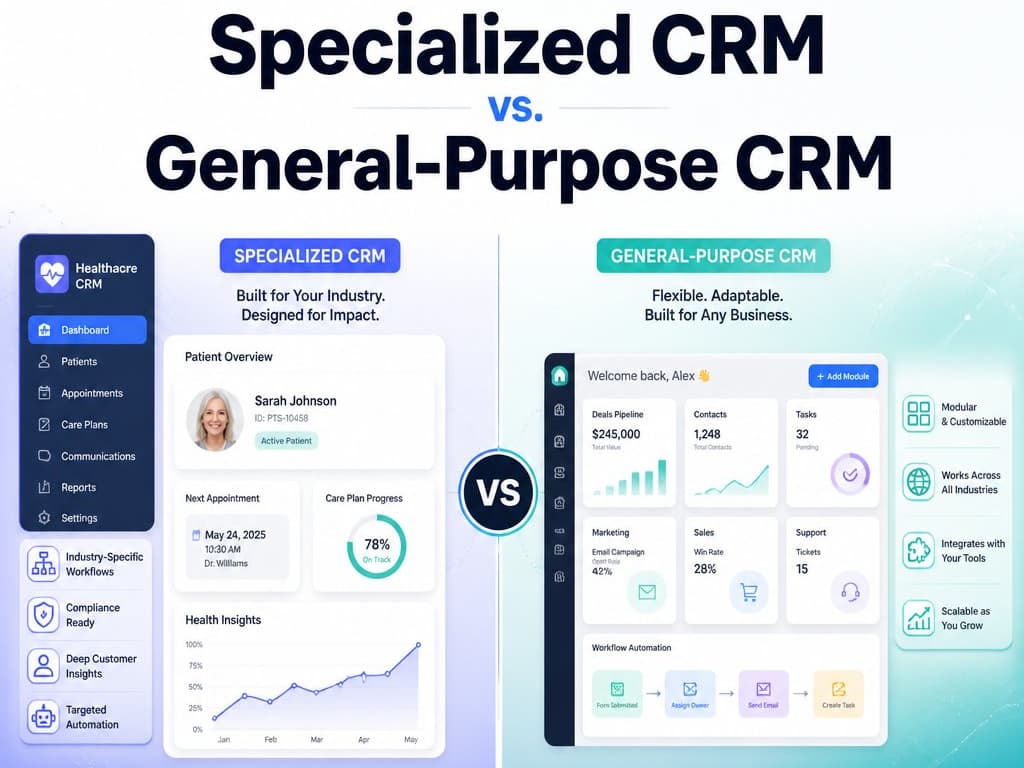
Specialized CRM vs. General-Purpose CRM: What Actually Fits a Gulf SMB
Not every business runs on a sales pipeline. A breakdown, from a decade building both general-purpose and specialized multitenant CRMs for Gulf SMB verticals, of when Zoho/HubSpot fits and when your workflow has quietly outgrown it.
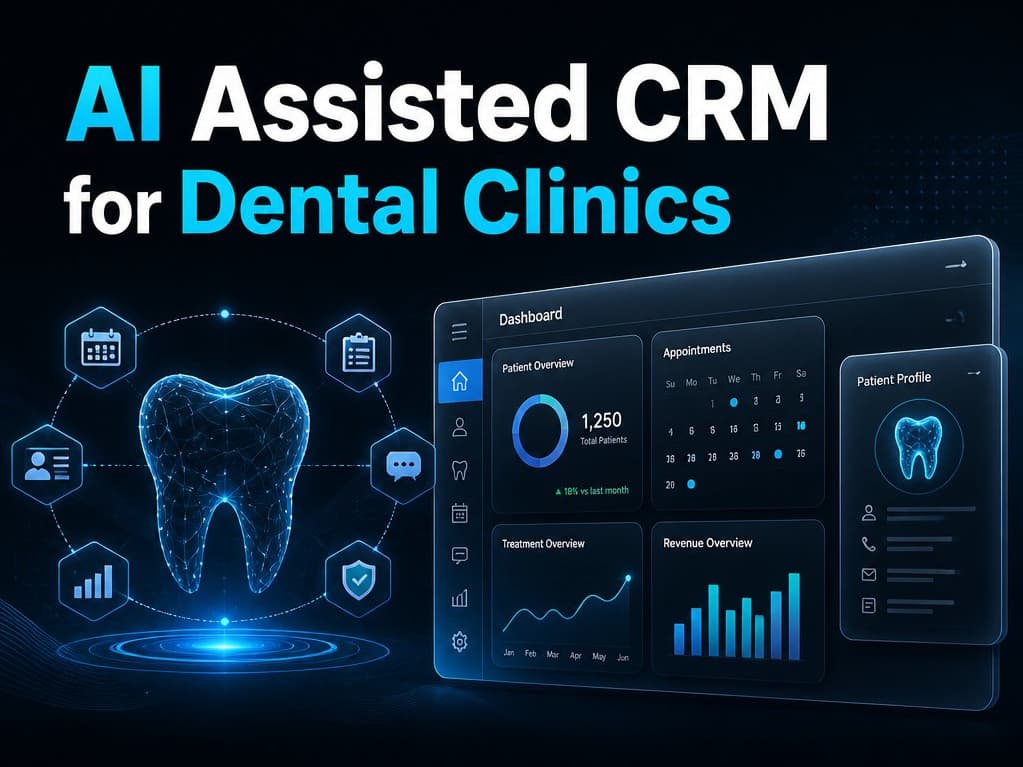
AI Assisted CRM for Dental Clinics in Qatar in 2026: A Practical Guide
Patients researching dental care increasingly ask an AI assistant first, and being visible there depends on having clear, structured, accurate information about your clinic publicly available services.