

The 12 Questions to Ask Before You Sign an ERP Contract in the Gulf
Twelve questions that have cost clients real money when they went unasked, including three Gulf-specific compliance questions to ask before the demo.
The 12 Questions to Ask Before You Sign an ERP Contract in the Gulf
The most expensive line in an ERP contract is the question you did not ask.
It rarely appears in the proposal. It shows up eight months later as a change request, a compliance gap, or a licence fee for a module nobody mentioned in the demo. By then the implementation is live enough to be painful and early enough to be hard to reverse.
This checklist is built from the questions that have cost Gulf buyers real money when they went unasked. Three of them are specific to the region: e-invoicing, data residency, and payroll integration. The other nine apply anywhere, but they matter more here because the compliance clock is usually running before the contract is signed.
By the end you will have twelve questions to take into the demo, the answers that should reassure you, and the answers that should make you walk away.
Tip
TL;DR, Ask about scope, change control, compliance, and exit before you talk about price. A vendor who cannot answer the exit questions clearly is telling you something.
Why the demo is the wrong place to start
A demo is a sales performance. It shows the product at its best, on the vendor's data, with the vendor driving. It is useful for judging whether the software can do a thing. It is useless for judging whether the vendor will deliver your thing, on your timeline, at the price in the proposal.
Start with the contract questions. Then use the demo to verify the answers. That order also changes the power dynamic: you are evaluating a delivery partner, not watching a product tour. Ask the twelve questions first, and the demo becomes a test rather than a performance.
Questions to ask an ERP vendor before the demo
Here are the twelve, grouped into four areas. Print them. Write the answers down in front of the vendor. An answer that is vague in the meeting will be vague in the project.
Scope and fit
1. Which of our processes will be standard, and which will be customised?
Every ERP is standard somewhere and custom somewhere. The danger is not customisation. It is a vendor who says "everything is standard" before seeing your process. Ask for a written list of the gaps and a price for each one.
2. What is explicitly out of scope?
The out-of-scope list protects both sides. If the vendor cannot produce one, the proposal is not a scope. It is a hope. Pay special attention to data migration, reporting, Arabic documents, and integrations with government platforms.
3. Who owns the configuration and the data model after go-live?
If only the vendor can change a workflow, you have bought a dependency, not a system. Ask whether your team can add fields, change approval routes, and export the full dataset without a support ticket.
Cost and change control
4. What is the total cost over three years, including changes?
The licence is the easy number. Ask for implementation, integration, training, support, hosting, and an assumed change budget. A useful proposal shows a range, not a single number. If the vendor refuses to model year two and three, assume the worst, and read what ERP implementation cost actually includes before the meeting.
5. What is the change-request process and the hourly rate?
Projects do not fail because changes happen. They fail because nobody agreed how changes would be priced. Ask for the rate card, the approval threshold, and a recent example of a change request with its final cost.
6. What happens if the project is late?
Ask who bears the cost of delay. The answer should include a delivery plan with milestones, acceptance criteria, and a remedy. "We always deliver on time" is not a plan.
Compliance
7. How do you handle e-invoicing in each country we operate in?
This is not a single feature. Saudi ZATCA Phase 2, UAE e-invoicing, Oman Fawtara, and Egypt's ETA system have different models, formats, and timelines. Ask for the specific version, the certification or integration partner, and a reference customer live on it. A generic "we are compliant" answer is not enough. If the vendor claims Saudi readiness, ask them to walk through the ZATCA Phase 2 technical requirements line by line.
8. Where is our data stored, and can we keep it in-country?
Data residency is a commercial question as much as a legal one. Ask where the primary database, backups, and logs live; who can access them; and what happens if a regulator asks. For Saudi customers, the PDPL conversation is unavoidable, this guide to where a Saudi CRM is allowed to live covers the questions to put in the contract. For UAE and Qatar, the answer depends on the entity and the data category. Get it in writing.
9. Which payroll and government integrations are already live?
Payroll is the module everyone assumes works. The integrations are where implementations stall: WPS, GOSI, Qiwa, Mudad, and their equivalents across the Gulf. Ask for the current integration list, the failure and retry behaviour, and the name of a customer using each one.
Delivery and exit
10. Who is on the implementation team, and how many projects are they running?
Ask for names, roles, and allocation. A senior sales team and a junior delivery team is a familiar story, and one of the recurring reasons ERP implementations fail in UAE projects. If the people in the demo will not be on the project, say so now and adjust expectations — or the price.
11. What does acceptance look like, and who signs it?
Define acceptance before work starts. Which reports must reconcile? Which integrations must pass? Which users must be trained? Without acceptance criteria, "go-live" becomes a date rather than an outcome.
12. What is the exit plan if we leave?
Ask for a full data export in an open format, the schema, the documentation, and a transition period. Ask what it costs. A vendor who cannot describe an exit is not necessarily dishonest, but they have not designed for one, and that tells you how they think about lock-in.
What a good answer sounds like
Good answers are specific, written, and slightly boring. They include names, dates, versions, and prices. They acknowledge trade-offs. They say "that is out of scope" without defensiveness.
A strong vendor will also ask you questions: about your data quality, your process owners, your timeline, and who will make decisions. A vendor who only answers is selling. A vendor who interrogates the scope is preparing to deliver.
A weak answer is confident and generic. "We handle all compliance" without naming a country, a version, or a reference customer. "Our team is very experienced" without names. "Changes are easy" without a rate card. Confidence is not evidence.
What should make you walk away
- No written scope or out-of-scope list.
- No named implementation team.
- "Compliance is included" without a country, version, or reference.
- No change-control rate card.
- No exit plan or data-export commitment.
- A timeline that assumes your team is available full-time when they are not.
None of these are automatically disqualifying. Each one is a risk that should be priced. If the vendor will not price it, you are the one carrying it.
Warning
Compliance details change. Confirm current e-invoicing phases, data-residency rules, and payroll thresholds with the relevant authority before signing. Do not rely on a vendor deck or a blog post, including this one.
Wrapping Up
The twelve questions are not a procurement formality. They are the cheapest due diligence you will do on an ERP project. Ask them before the demo, write down the answers, and make the proposal reflect them.
A good contract is not the one with the lowest price. It is the one where both sides know what happens when reality arrives.
Evaluating an ERP proposal? See the systems we build or get in touch to pressure-test the scope before you sign.
Related Posts
Related Articles
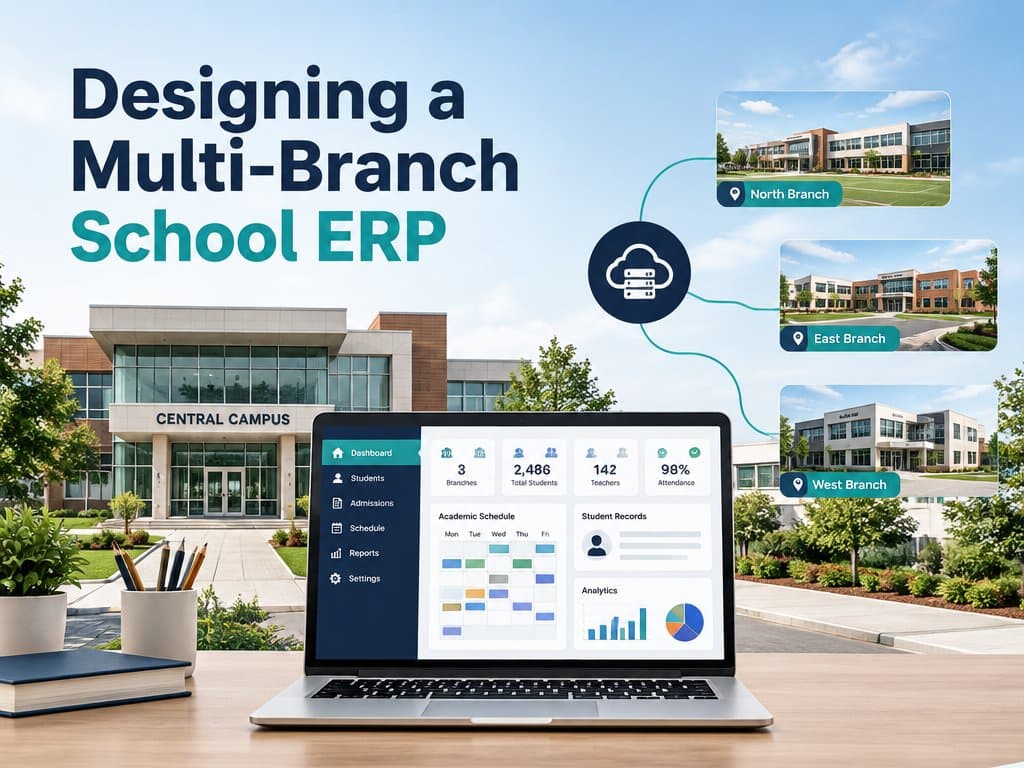
Designing a Multi-Branch School ERP: Modeling Branches, Students, and Fees
A practical data model for a multi-branch school ERP: branch tenancy, student transfers, fee structures, and group reporting that does not double count.
Oman Fawtara E-Invoicing: What Your ERP Must Do Before April 2027
Oman's e-invoicing rollout is now law: large taxpayers go live 1 April 2027, everyone else 1 October 2027. Here is what has to change inside your ERP.
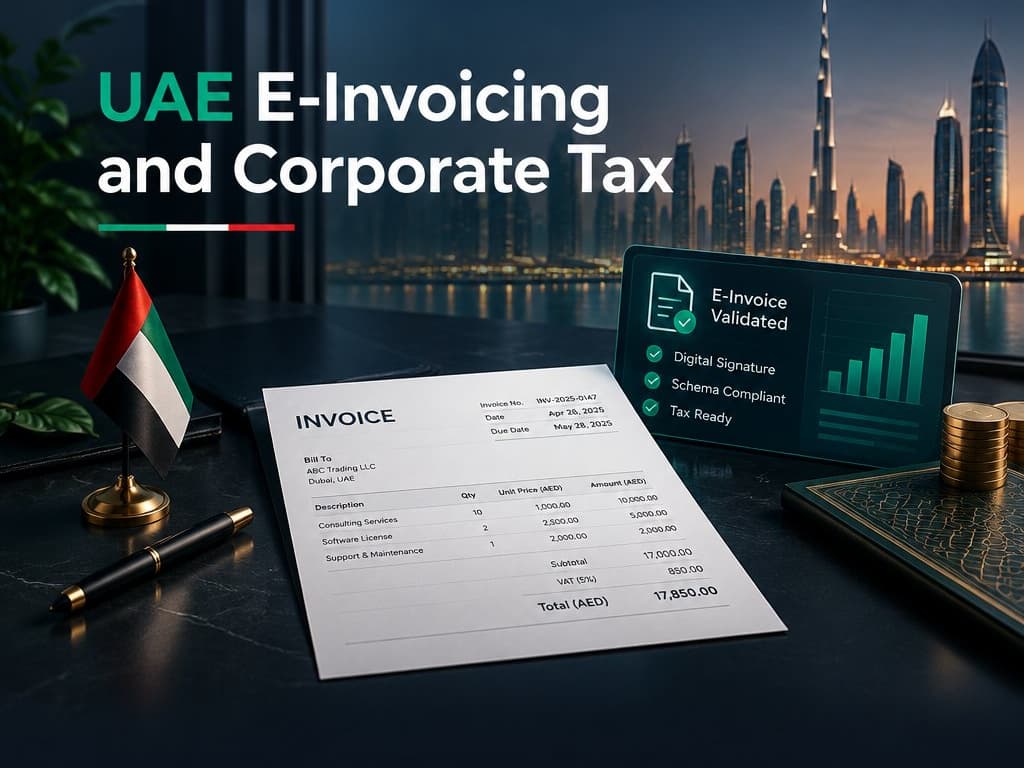
UAE E-Invoicing and Corporate Tax: What Your Accounting System Must Handle Before 2027
The ASP deadline is 30 October 2026 and go-live is 1 January 2027. Here is what your accounting system must handle, for e-invoicing and corporate tax together.