

UAE E-Invoicing and Corporate Tax: What Your Accounting System Must Handle Before 2027
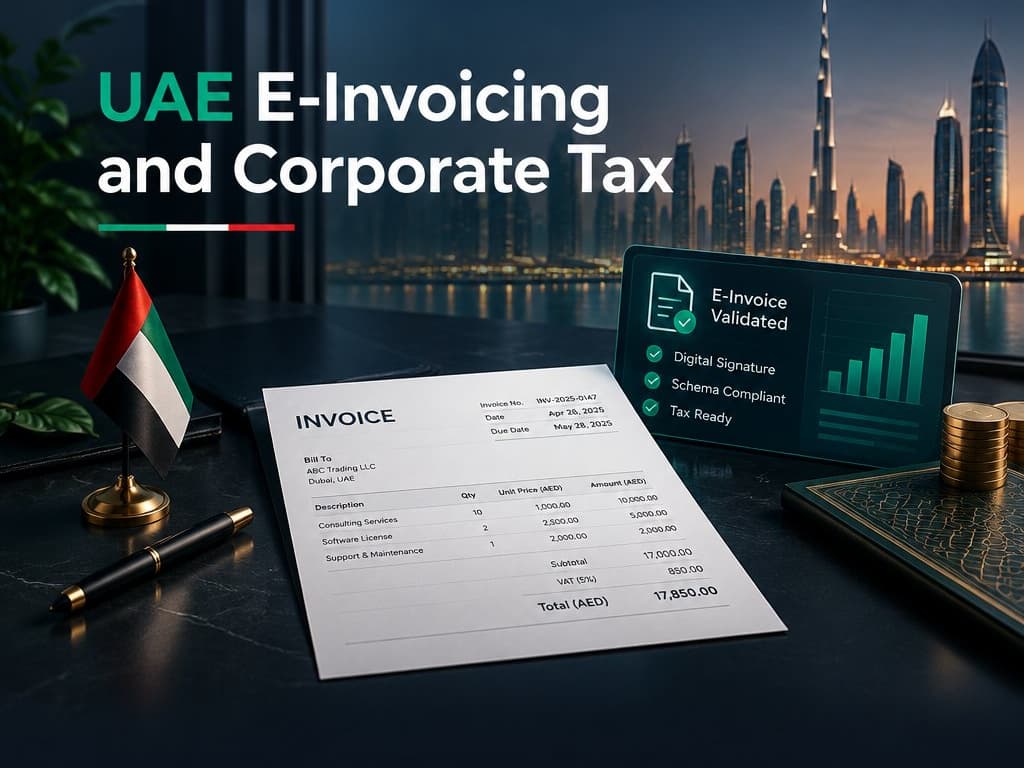
The ASP deadline is 30 October 2026 and go-live is 1 January 2027. Here is what your accounting system must handle, for e-invoicing and corporate tax together.
UAE E-Invoicing and Corporate Tax: What Your Accounting System Must Handle Before 2027
Two deadlines are converging on UAE finance teams, and most accounting systems were built for neither.
The first is e-invoicing. The pilot opened in July 2026, and large businesses are already choosing an Accredited Service Provider before the January 2027 go-live. The second is corporate tax, which turns the accounting system from a bookkeeping tool into the evidence trail behind every filing.
UAE e-invoicing is not a PDF with a logo. It is a structured, validated exchange between your system, an accredited provider, and the Federal Tax Authority. Corporate tax is not a year-end calculation. It is a set of records that must survive an audit years later.
This guide explains what the two obligations actually demand, which businesses are in scope and when, where common accounting stacks break, and a 90-day readiness plan you can run before the deadlines get uncomfortable.
Tip
TL;DR ,Treat e-invoicing and corporate tax as one data problem. If your invoices, ledgers, and supporting documents do not share a clean audit trail, you will fix the same issue twice.
Warning
UAE requirements are still being phased in. The dates below reflect published guidance as of October 2026. Confirm the current deadlines and technical specifications with the Ministry of Finance, the Federal Tax Authority, and your Accredited Service Provider before you commit a project plan.
The two deadlines that collide
The e-invoicing timeline is phased by revenue. A business with annual revenue of AED 50 million or more must appoint an Accredited Service Provider by 30 October 2026 and implement the system by 1 January 2027. Businesses below that threshold have until 31 March 2027 to appoint a provider and 1 July 2027 to implement. Government entities follow a later schedule.
Corporate tax has a different rhythm. It is an annual obligation, but the evidence is created daily. Every invoice, credit note, journal entry, and supporting document becomes part of the record set. If the accounting system cannot connect the transaction to the document and the document to the ledger, the finance team rebuilds the story at filing time.
The collision is practical: the same invoice data has to satisfy two regimes. One wants a structured electronic document exchanged in near real time. The other wants a complete, traceable record of the business transaction. A system that treats them as separate projects will duplicate work and create two versions of the truth.
What UAE e-invoicing actually requires
The UAE model is a decentralised continuous transaction control and exchange framework, usually shortened to DCTCE. In plain terms, invoices are issued in a structured electronic format, validated through an Accredited Service Provider, and exchanged with the buyer while the relevant tax data reaches the FTA.
That is different from a portal where you upload a PDF. The invoice itself has to be machine-readable, and the provider is part of the flow.
The DCTCE model, in plain terms
Think of the Accredited Service Provider as the certified rail between your business and the tax system. Your ERP or billing system produces the structured invoice. The provider validates it against the technical rules, exchanges it with the buyer's side, and reports the required data to the authority.
For a small business, this can look like a hosted invoicing tool with an accredited provider behind it. For a larger business, it is an integration project: master data, tax codes, invoice formats, credit notes, and error handling all have to be mapped.
Your TIN is the participant identifier
The UAE guidance uses the Tax Identification Number, the first ten digits of your TRN, as the participant identifier for e-invoicing. A business that is in scope but not registered for a tax type may still need to register with the FTA to obtain a TIN.
This sounds administrative. It is actually a data-quality issue. If your customer and supplier records do not carry a clean, validated TIN, invoices will fail validation or be exchanged against the wrong participant. Clean master data is not a nice-to-have in an e-invoicing project. It is the project.
What "structured invoice" means for your ERP
A structured invoice is not a template. It is a defined set of fields in a defined format, with rules about what is mandatory, what is conditional, and how totals and tax amounts must reconcile.
For an accounting system, that means four capabilities:
- Generate the required fields from master data, not from free-text fields.
- Produce and store the structured document, not only a PDF rendering.
- Handle credit notes and corrections without breaking the audit chain.
- Record the validation result and the provider response for every document.
If your team currently "fixes" invoices by editing the PDF, the process has to change before the integration starts.
Who has to be ready, and when
| Business category | Appoint a provider | Implement |
|---|---|---|
| Revenue ≥ AED 50 million | 30 October 2026 | 1 January 2027 |
| Revenue < AED 50 million | 31 March 2027 | 1 July 2027 |
| Government entities | 31 March 2027 | 1 October 2027 |
Two practical notes. First, the threshold is based on revenue, so a growing business should check which phase it will fall into, not only which phase it is in today. Second, business-to-consumer transactions are treated differently from business-to-business transactions, and the scope can change. Confirm your specific transaction mix with your provider rather than assuming the consumer side is out of scope forever.
There is also a temporary grace period for transactions between members of the same VAT group, beginning 1 January 2027. The grace period delays the compliance date for those transactions. It does not remove them from scope permanently.
Corporate tax: the audit trail is the product
Corporate tax makes the accounting system auditable. The rate is one part of the conversation; the record is the other.
A defensible record set connects five things: the transaction, the invoice, the ledger entry, the supporting document, and the approval. When a reviewer asks why a payment was treated a certain way, the system should answer without a reconstruction project.
Most accounting stacks are strong on the ledger and weak on the joins:
- The invoice lives in a billing tool, but the ledger entry is manual.
- The contract lives in a shared drive with no link to the customer record.
- The approval happens in email and disappears when the employee leaves.
- The credit note is issued, but the original invoice is not marked as adjusted.
- The related-party transaction is recorded, but the supporting analysis lives in a spreadsheet.
None of these are exotic. They are the normal way small and mid-sized businesses operate. They become expensive when the tax authority asks for the complete picture and the team has to rebuild it from four systems.
Where most accounting stacks break
The first break is master data. Customer names, TINs, addresses, and tax treatments are inconsistent across sales, finance, and operations. E-invoicing exposes this immediately because validation is unforgiving.
The second is the invoice lifecycle. A credit note is not a new sale. A corrected invoice is not a replacement for the original record. If the system overwrites history, the audit trail disappears.
The third is document retention. The structured invoice, the validation response, and the supporting documents need to be retained together and remain readable. A PDF in an email archive is not a retention strategy.
The fourth is reporting. Corporate tax and VAT reporting draw from the same transactions but ask different questions. A system that produces one report by exporting to Excel creates a monthly reconciliation project.
This is also why "we will add e-invoicing later" is a risky plan. The integration work is mostly data and process work, and it gets harder after the invoice volume grows. If invoice data still enters the business through manual typing, AI document data entry is worth fixing before the structured-invoice project starts. The same pattern shows up in why ERP implementations fail in UAE projects, and the regional comparison with Saudi ZATCA Phase 2 is useful even if the technical models differ.
A 90-day readiness checklist
Days 1–15: scope and ownership. Confirm your phase, your transaction mix, and your provider options. Name one owner for e-invoicing and one for the corporate tax record set. They should not be the same person by default.
Days 16–30: master data. Clean customer and supplier records. Validate TINs. Standardise tax codes, units of measure, and address formats. Decide what to do with records that cannot be cleaned.
Days 31–45: invoice lifecycle. Map how invoices, credit notes, and corrections are created today. Identify every manual edit and every PDF-only step. Define the target flow with your provider.
Days 46–60: integration design. Decide whether the provider connects to your ERP, your billing system, or both. Map the fields, the validation responses, and the failure paths. Build a test plan with real invoices, not sample data.
Days 61–75: audit trail. Connect invoices to ledger entries and supporting documents. Add approval records. Test a mock audit query: pick one transaction and retrieve the full story without asking anyone.
Days 76–90: pilot and training. Run a controlled pilot with a small invoice set. Train finance and sales on the new process. Write down the exceptions and fix the top three before full rollout.
Important
Do not treat the provider integration as the whole project. The provider validates the invoice. Your system still has to produce clean data, retain the record, and connect it to the ledger.
Build vs retrofit: the honest trade-off
If your accounting system is recent and configurable, retrofit is usually the right answer. Add the provider integration, clean the master data, and fix the invoice lifecycle. The work is real, but the platform is not the problem.
If the system is a patchwork of spreadsheets, a legacy ledger, and a billing tool that nobody wants to touch, retrofitting can cost more than replacing the accounting layer. The decision is not about the licence price. It is about how much of the audit trail you can trust today.
A useful test: pick five recent transactions and try to retrieve the invoice, the ledger entry, the approval, and the supporting document without asking a person. If you cannot do it for five, you cannot do it for five thousand.
For UAE teams weighing a bigger platform change, the same trap described in Zoho CRM vs Custom CRM UAE applies to finance software: a big suite is not automatically a better fit. The question is whether the system matches the process you actually run.
Wrapping Up
UAE e-invoicing and corporate tax are two views of the same obligation: the business must be able to prove what happened, with structured data and a traceable record. The January 2027 deadline makes that urgent for large businesses; the 2027 phases bring everyone else in.
Start with master data and the invoice lifecycle. Then connect the ledger and the supporting documents. The provider integration matters, but it is not the whole project.
Preparing for UAE e-invoicing? See the systems we build or get in touch to review your accounting stack before the deadline.
Related Posts
Related Articles
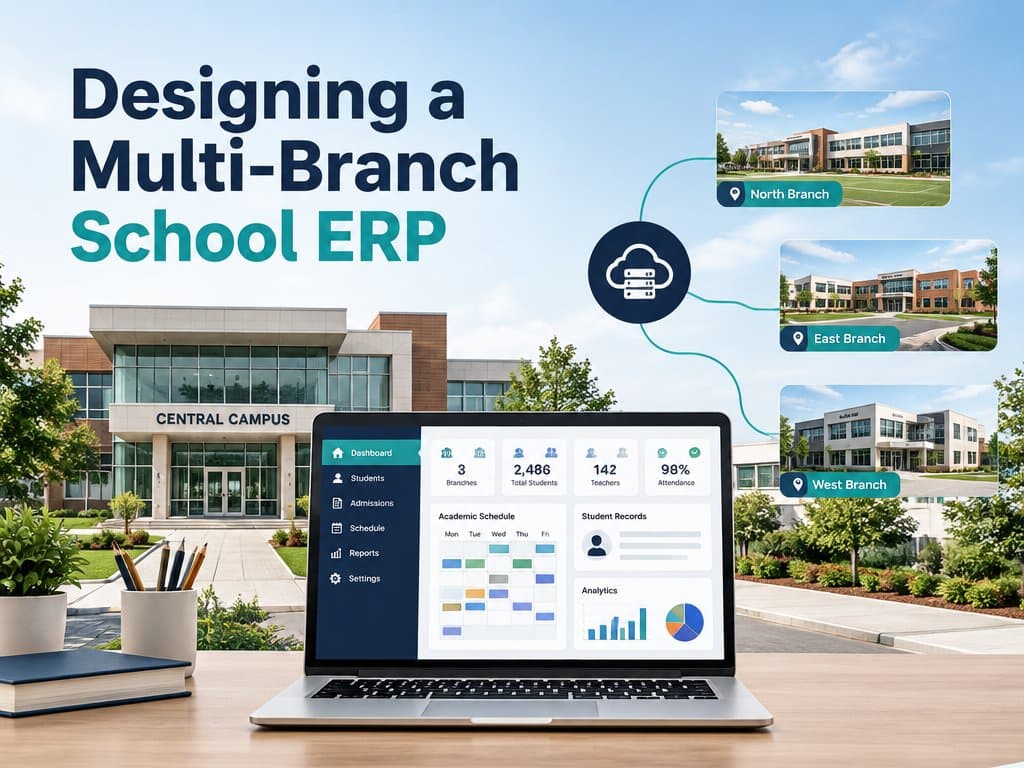
Designing a Multi-Branch School ERP: Modeling Branches, Students, and Fees
A practical data model for a multi-branch school ERP: branch tenancy, student transfers, fee structures, and group reporting that does not double count.
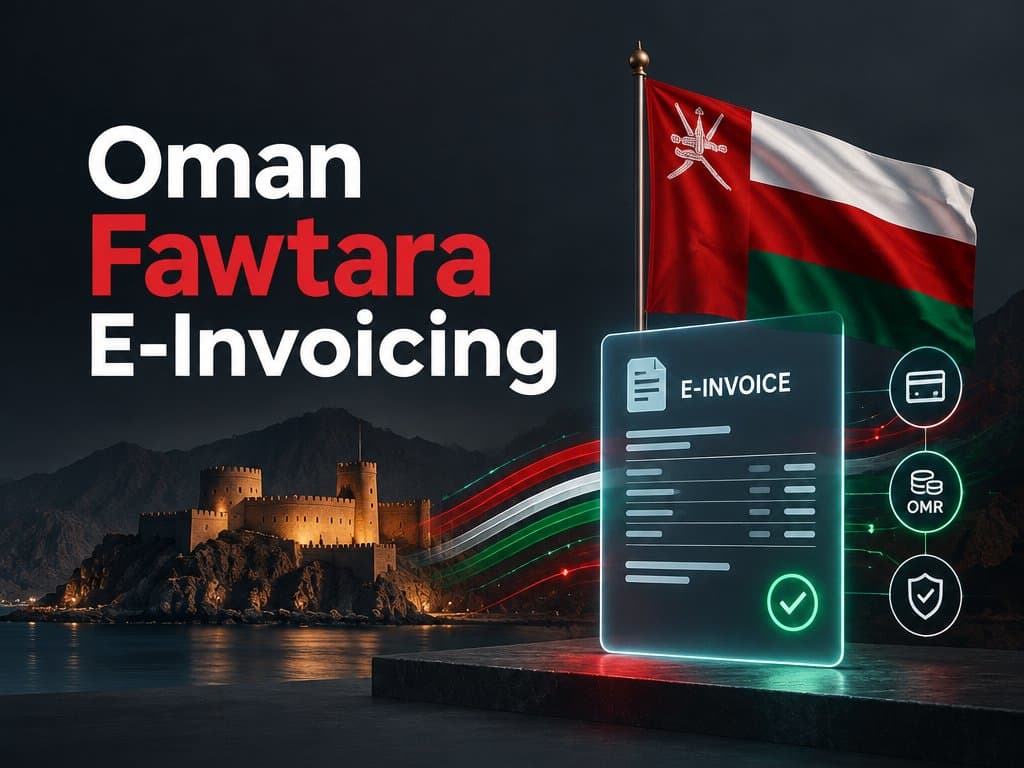
Oman Fawtara E-Invoicing: What Your ERP Must Do Before April 2027
Oman's e-invoicing rollout is now law: large taxpayers go live 1 April 2027, everyone else 1 October 2027. Here is what has to change inside your ERP.

The 12 Questions to Ask Before You Sign an ERP Contract in the Gulf
Twelve questions that have cost clients real money when they went unasked, including three Gulf-specific compliance questions to ask before the demo.